Deep in the quiet forest, where the only sound is the whisper of leaves, one bird breaks the silence with its rhythmic tapping—the woodpecker. With its brilliant red crest and bold black-and-white pattern, this bird turns every tree trunk into a stage, performing one of nature’s most iconic sounds.
The woodpecker is a symbol of resilience, rhythm, and wild beauty.
A Bird Built for Drumming
Everything about a woodpecker’s body is perfectly designed for life on the trees:
- A tough, chisel-like beak
- A shock-absorbing skull that protects its brain while drumming
- Strong neck muscles
- Zygodactyl feet (two toes forward, two backward) for gripping bark
- Stiff tail feathers that act like a support prop
These adaptations allow the woodpecker to hammer into wood without injury—up to 20 times per second!
A Fiery Crown That Demands Attention
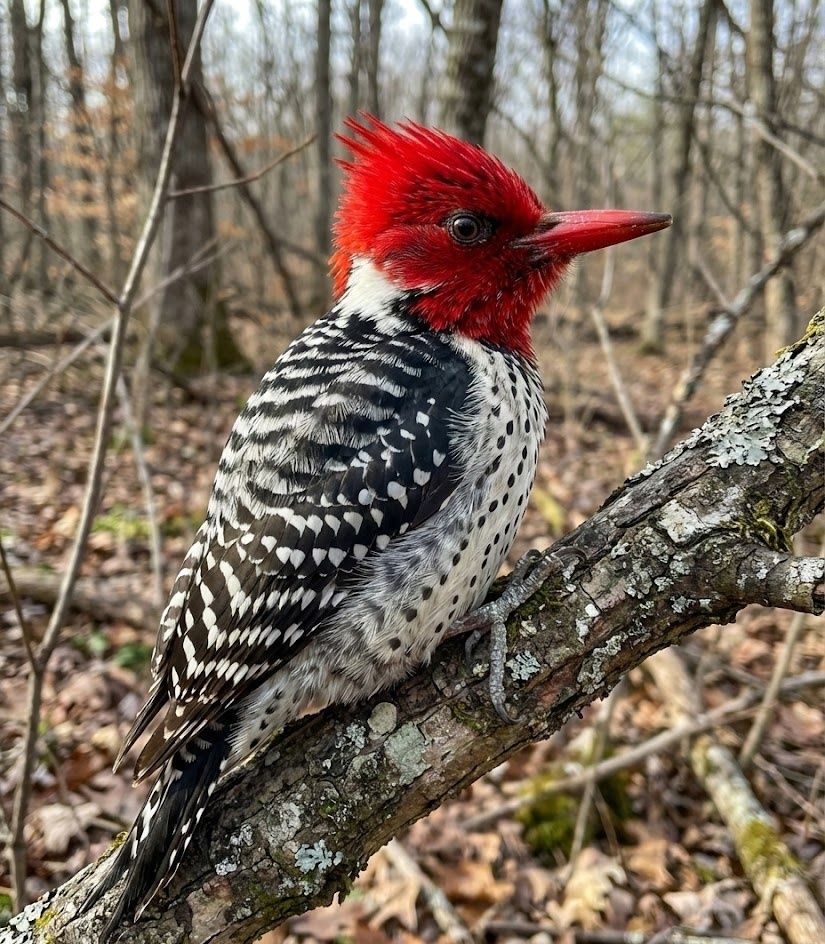
The individual in your photo has an especially striking look:
- A brilliant, flame-red crest and head
- A matching red beak
- A bold black-and-white barred body
- Expressive dark eyes
- Fine white spotting along the wings and tail
This dramatic blend of colors makes the bird stand out beautifully against the muted tones of the forest.
Why Woodpeckers Drum
Woodpeckers tap, peck, and drum for several reasons:
- To find insects hidden under bark
- To create nesting cavities
- To communicate with other woodpeckers
- To declare territory during breeding season
Each species has its own drumming rhythm—almost like a unique signature beat.
What Woodpeckers Eat
Their diet often includes:
- Beetles and larvae
- Ants
- Termites
- Nuts and seeds
- Tree sap (in some species)
Using their long, sticky tongue—sometimes extending up to three times the length of their beak—they extract insects from deep inside tree crevices.
Life in the Forest
Woodpeckers are vital to forest ecosystems. Their nesting holes later become homes for:
- Owls
- Bluebirds
- Bats
- Small mammals
Their constant foraging helps control insect populations and keeps trees healthier.
They are also birds of habit, spending much of their time exploring tree trunks, moving vertically with surprising agility.
A Symbol of Strength and Persistence
Across cultures, woodpeckers are seen as:
- Symbols of determination
- Nature’s builders
- Guardians of the forest
- Messengers of persistence and focus
Their constant tapping feels like a reminder to keep going, keep working, and never give up.
Leave a Reply