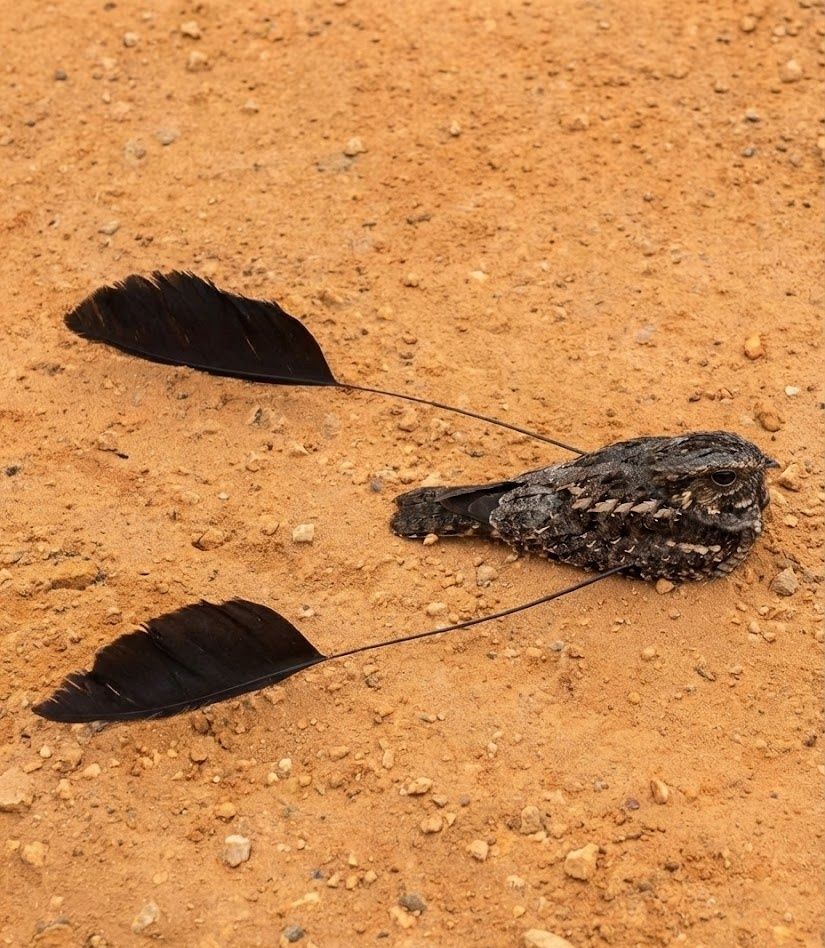
In the world of birds, few species are as surprising and otherworldly as the Standard-winged Nightjar. At first glance, this small, camouflaged bird blends perfectly into the dusty ground beneath it. But during breeding season, the male transforms—revealing two astonishing, elongated wing feathers that look like something from a fantasy film.
This species proves that nature is full of brilliant surprises.
A Master of Disguise
Nightjars are known for their exceptional camouflage, and the Standard-winged Nightjar is no exception. Its mottled brown, gray, and black plumage helps it disappear into dirt, rocks, and dry vegetation. When resting on the ground, it becomes nearly invisible to predators and observers alike.
This cryptic appearance allows it to survive in its typical habitats:
- Dry savannas
- Open woodlands
- Sahel regions of West Africa
The Incredible Standard Wings
The bird gets its name from the two spectacular feathers that grow from the male’s wings during the breeding season. These feathers:
- Extend far beyond the rest of the wing
- Are carried on long, thin shafts
- End in large, paddle-like tips
- Bounce and float in the air as the bird flies
When the male is in display flight, the feathers trail behind like two black banners—creating one of the most unique courtship spectacles in the animal kingdom.
Behavior and Courtship Displays
During mating season, males perform dramatic aerial displays at dusk. They fly low over the ground, fluttering rhythmically, letting the long “standards” wave and shimmer in the evening light. This mesmerizing dance is meant to attract females.
When the season ends, the special feathers fall off, and the bird returns to its more ordinary appearance.
Life in the Twilight
Standard-winged Nightjars are nocturnal. They become active during dusk and nighttime, feeding on insects such as moths and beetles. Their wide mouths allow them to scoop insects from the air as they glide silently through the night.
They don’t build nests. Instead, they lay their egg directly on bare ground—a strategy supported by their near-perfect camouflage.
A Rare Beauty of West Africa
This species is native to countries such as:
- Senegal
- Mali
- Guinea
- Sierra Leone
- Burkina Faso
- Nigeria
Though not widely seen, those lucky enough to witness a male’s display never forget it. The Standard-winged Nightjar is a reminder of just how diverse and magical birdlife can be.
Leave a Reply