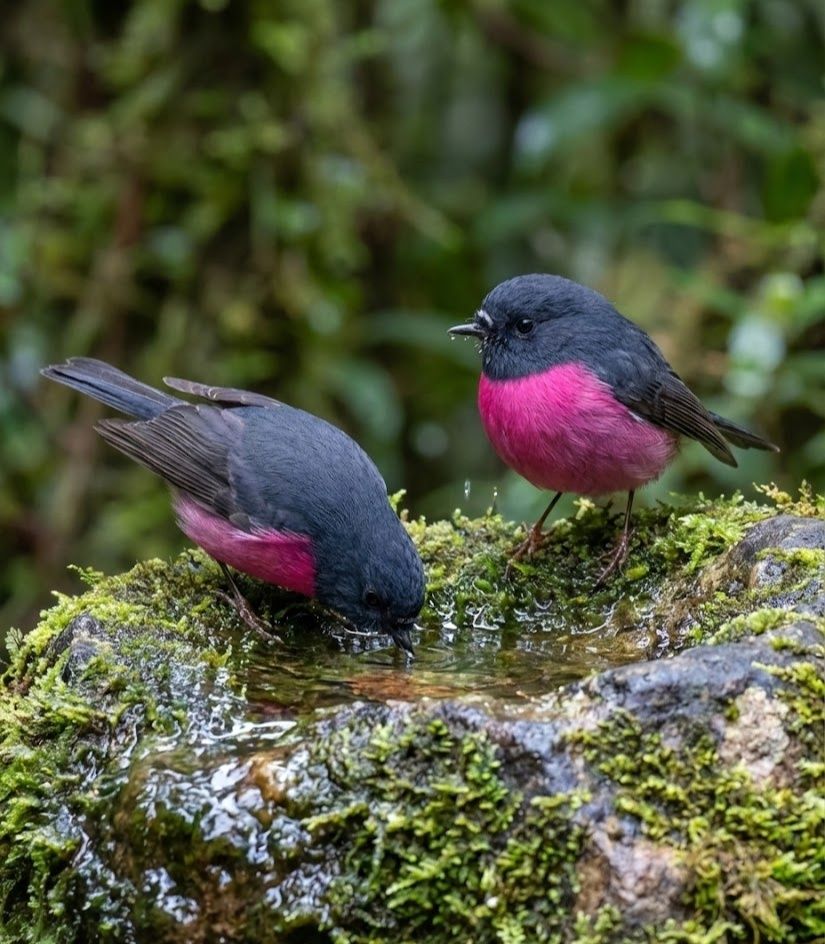
In the misty forests of southeastern Australia, a small jewel flits among the shadows—the Pink Robin. With its velvety dark plumage and bright bubblegum-pink chest, this tiny bird looks almost too perfect to be real. It’s one of nature’s most charming contrasts: soft, delicate, and strikingly vibrant all at once.
A Stunning Splash of Pink
Male Pink Robins are instantly recognizable. Their feathers form a gorgeous color palette:
- A deep charcoal-black head, back, and wings
- A glowing pink chest and belly
- A small, neat black beak and expressive dark eyes
Females, meanwhile, are dressed in softer brown tones, perfectly camouflaged for nesting but still subtly elegant.
This dramatic difference between males and females—called sexual dimorphism—is common in many bird species, but the Pink Robin takes it to another level with its bold coloration.
Where Pink Robins Live
These beautiful birds are native to the cooler, wetter regions of southeastern Australia, especially:
- Tasmania
- Victoria
- Parts of New South Wales
They prefer dense, mossy forests, where they hop between logs and low shrubs in search of food. Misty mountain areas and rainforest gullies are their ideal homes.
Behavior: Small but Energetic
Despite their soft appearance, Pink Robins are active and lively. They spend much of their time foraging close to the forest floor, feeding on:
- Insects
- Spiders
- Small larvae
They often perch silently, scanning the ground for movement before darting down to catch prey.
Breeding: A Forest Architect
The female Pink Robin builds an exquisite, tiny nest—one of the most beautifully crafted in nature. Made of:
- Moss
- Bark
- Spider webs
- Soft plant fibers
The nest is shaped like a delicate cup and placed carefully on low shrubs or branches, blending perfectly with the forest around it.
A Rare Sight Worth Protecting
Pink Robins are not commonly seen by casual forest walkers. Their shy nature and preference for thick vegetation make them elusive. But for those who spot one, it feels like stumbling upon a secret—an unexpected flash of pink in the green shadows.
They remind us how diverse and magical Australia’s wildlife truly is. Protecting their habitats ensures that future generations can continue to admire these tiny forest gems.
Leave a Reply