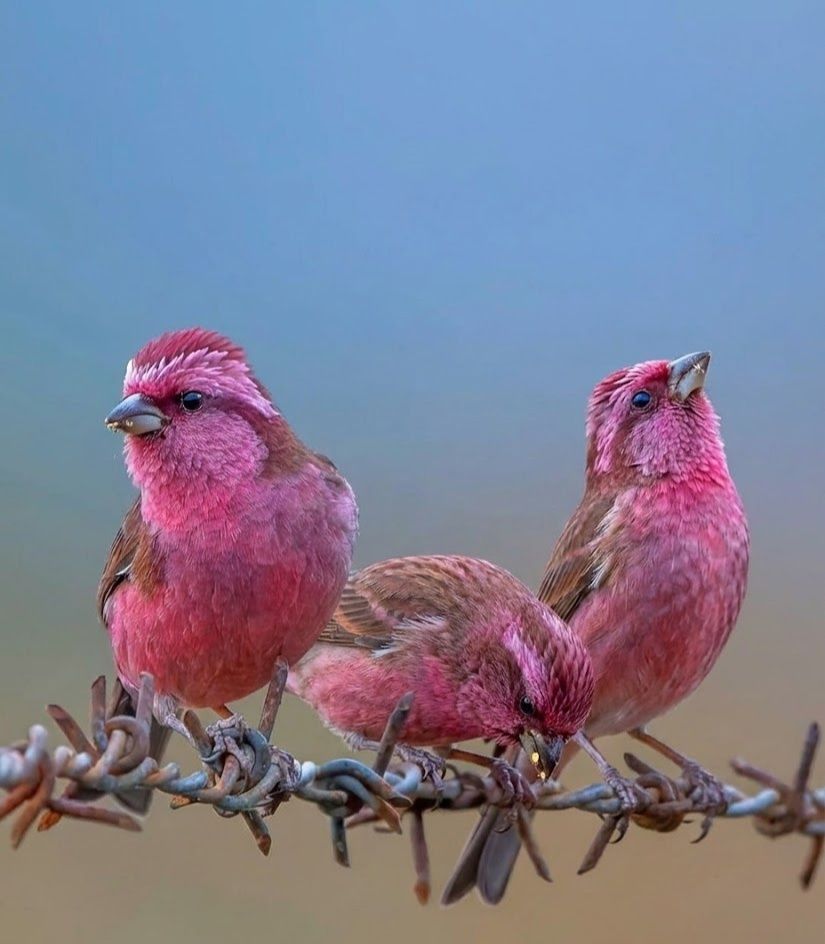
High in the rugged peaks of the Himalayas, where icy winds sweep across alpine meadows and silence rules the landscape, a splash of unexpected color appears—the Himalayan Beautiful Rosefinch. With its vibrant pink plumage and delicate stature, this tiny bird brings warmth and charm to some of the world’s coldest and harshest environments.
It’s a gem among mountain birds, captivating anyone lucky enough to spot it.
A Burst of Pink in a Harsh Landscape
Male Himalayan Rosefinches are stunning. Their bodies are covered in:
- Rich rosy-pink feathers from head to belly
- Subtle browns and warm tones along the wings
- A compact, seed-cracking beak
- Bright, expressive eyes that bring life to their gentle faces
Females, though less vibrant, carry elegant brown and streaked plumage that helps them blend into rocky terrain and shrubby grasslands.
The contrast between the male’s brilliant colors and the minimalist Himalayan backdrop makes sightings of this bird truly magical.
Where They Live
These rosefinches inhabit:
- The high-altitude slopes of the Himalayas
- Northern India
- Nepal
- Bhutan
- Western China
They prefer alpine scrub, meadows, and rocky slopes, often residing at elevations between 3,000 and 5,000 meters. Even in cold, thin air, they thrive.
Life at High Altitudes
Himalayan Beautiful Rosefinches are well adapted to mountain life. Their daily routine includes:
- Foraging for seeds, berries, and small plant buds
- Traveling in small flocks
- Perching on rocks or thorny shrubs
- Diving into thick vegetation to avoid predators
In winter, when conditions become harsher, they sometimes descend to lower altitudes in search of food.
A Song That Echoes Through the Mountains
Despite their small size, these birds have a sweet, noticeable voice. Their gentle calls and melodic chirps can be heard drifting across the slopes—soft but persistent, adding life to the quiet Himalayan ranges.
Breeding: A Private Mountain Romance
During breeding season, males show off their brightest plumage. They gather nesting materials such as:
- Dry grass
- Moss
- Fine plant fibers
Females craft delicate cup-shaped nests, usually hidden within dense shrub cover. Their eggs and chicks stay well concealed from predators and the unforgiving mountain weather.
A Rare Beauty Worth Protecting
Though not endangered, the Himalayan Beautiful Rosefinch depends on stable alpine habitats. Climate change and human disturbance threaten these delicate ecosystems.
Preserving their environments ensures that these radiant mountain jewels continue to brighten the Himalayas for generations to come.
Leave a Reply